Why a Relaxing Workspace Matters
A home workspace should help you feel focused without making you feel tense. When your surroundings are cluttered, uncomfortable, or poorly lit, even simple tasks can feel more difficult. A few thoughtful changes can make your workspace calmer, more inviting, and easier to use every day.
You do not need a large room or an expensive makeover. A relaxing workspace can be created in a corner of a bedroom, living room, or dining area. The goal is to build a setting that supports concentration while also giving you a sense of comfort.
Choose the Right Location
Start by considering where your workspace will fit best. If possible, choose an area with natural light, limited foot traffic, and enough room for your desk and chair.
Keep these factors in mind:
– Light: A window can provide natural brightness and a pleasant view.
– Noise: Choose a quieter location away from televisions, busy hallways, or loud appliances.
– Privacy: A corner, divider, or bookshelf can help separate work from the rest of your home.
– Space: Leave enough room to sit comfortably and move your arms freely.
– Routine: A consistent work location can help you shift into work mode more easily.
If you share your home with others, communicate when you need quiet time. A simple sign, closed door, or agreed-upon schedule can reduce interruptions without making the space feel isolated.
Select Comfortable, Supportive Furniture
Comfort has a direct effect on how relaxed you feel. A desk and chair should support your body and make it easy to work without constant adjustments.
Choose a chair that allows your feet to rest flat on the floor. Your knees should be close to a right angle, and your lower back should feel supported. If your chair does not provide enough support, try adding a small cushion or rolled towel.
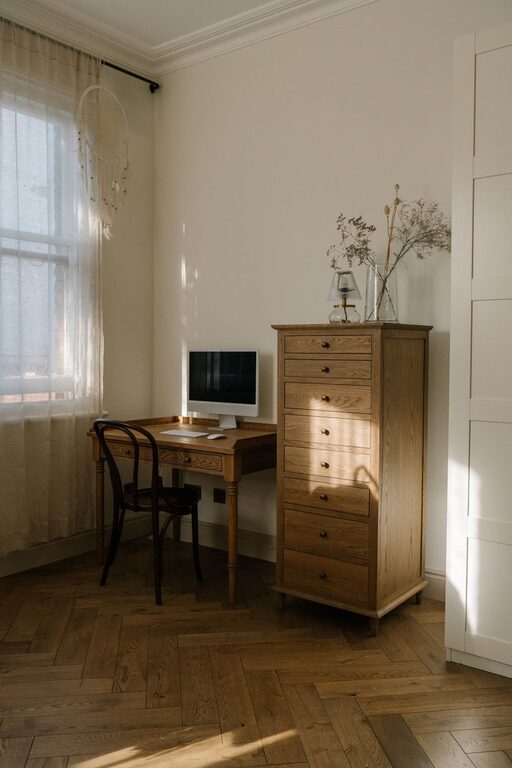
Your desk should provide enough room for your computer, notebook, and any daily supplies. Avoid choosing a surface that is so large that it encourages clutter. A compact desk can work well when paired with smart storage.
Consider the height of your screen, too. The top of the monitor should be near eye level, so you do not need to bend your neck for long periods. A stand, stack of books, or adjustable riser can help position the screen more comfortably.
Use Lighting to Create a Calm Atmosphere
Lighting can change the entire mood of a room. Harsh overhead lighting may make a workspace feel tiring, while soft, layered lighting can create a more comfortable environment.
Begin with natural light whenever possible. Position your desk near a window, but avoid placing the screen directly in front of or behind it. Direct sunlight can create glare and make it harder to see your display.
Add a desk lamp for focused lighting. Choose one with an adjustable arm so you can direct the light where you need it. A lamp with a warm or adjustable bulb can make the space feel more inviting, especially in the evening.
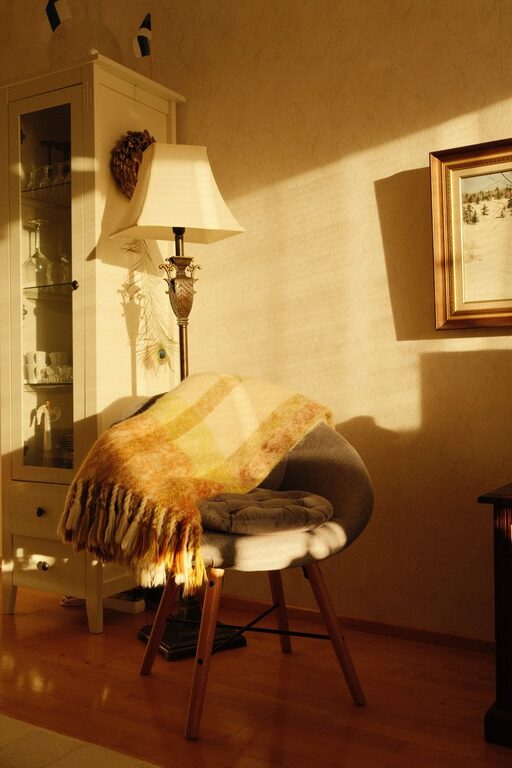
You can also add gentle ambient lighting, such as a small floor lamp or wall light. The aim is to create balanced brightness rather than relying on a single strong light source.
Keep the Workspace Organized
A clear workspace can make it easier to think clearly. Clutter does not always need to be removed completely, but each item should have a purpose and a place.
Try these simple organization ideas:
– Keep only daily essentials on the desk.
– Use a tray for notebooks, pens, and other small items.
– Store cables with clips, ties, or a simple cable box.
– Place less frequently used supplies in a drawer or nearby cabinet.
– Set aside a few minutes at the end of the day to reset the space.
– Use labels if several people share the same storage area.
Avoid organizing so much that the system becomes difficult to maintain. The best method is one you can follow without much effort. A small basket beside the desk may be more useful than a complicated collection of storage containers.
Add Natural Elements
Natural materials and plants can make a workspace feel more welcoming. A small plant on a shelf or desk can add color and soften the look of electronics and office furniture.
Choose a plant that fits the amount of light available and the level of care you prefer. If your space has limited sunlight or you travel often, a low-maintenance plant may be a practical choice. Even a vase of branches, a small bowl of stones, or a nature-inspired picture can add a similar feeling.
Wooden accessories, woven baskets, cotton textiles, and ceramic items can also bring warmth to the room. Use a few natural elements rather than filling every surface. A calm workspace usually benefits from balance and simplicity.
Choose Colors and Textures Carefully
Color can influence how a space feels. Soft neutrals, muted greens, gentle blues, and warm earth tones often create a calm background. You can add brighter colors through artwork, a desk mat, or a small accessory.
Textures also matter. A fabric chair cushion, small rug, or soft curtain can make the workspace feel less stark. If your workspace is in a shared room, a rug or compact screen can help define the area visually.
Try to choose items that work well together. A limited color palette can make the area feel more orderly, even when you have several useful objects nearby.
Manage Sound and Digital Distractions
A relaxing workspace is not only about appearance. Sound and digital interruptions can affect your ability to settle into a task.
If outside noise is a problem, consider using curtains, a rug, or a bookcase to soften sound. Soft background music, gentle instrumental sounds, or steady ambient noise may also help some people concentrate. Keep the volume low enough that it does not become another distraction.
Organize your digital space as well. Turn off unnecessary notifications, close unused browser tabs, and keep your most important files easy to find. A clean computer screen can support the same sense of calm as a clean desk.
Create a Simple Workday Routine
Your workspace will feel more relaxing when you pair it with predictable habits. At the beginning of the day, open the curtains, fill a glass of water, and review your priorities. At the end of the day, clear the desk, return supplies to their places, and close your work applications.
Short breaks can help you reset. Stand up, stretch gently, look away from the screen, or walk to another room. A brief change of activity can make it easier to return to your work with a fresh mind.
Try to keep work materials in the workspace when your day is over. This small boundary helps separate work time from personal time, especially when both happen under the same roof.
Personalize the Space
Finally, add a few details that make the workspace feel like yours. You might display a favorite photograph, hang simple artwork, or keep a meaningful object nearby. Choose items that make you feel comfortable without creating visual clutter.
A relaxing home workspace should support your habits, preferences, and daily needs. Start with the basics—comfortable furniture, good lighting, and practical organization—then make small changes over time. With a few intentional choices, even a modest corner can become a calm place to focus, create, and finish the day feeling more at ease.
About the Author